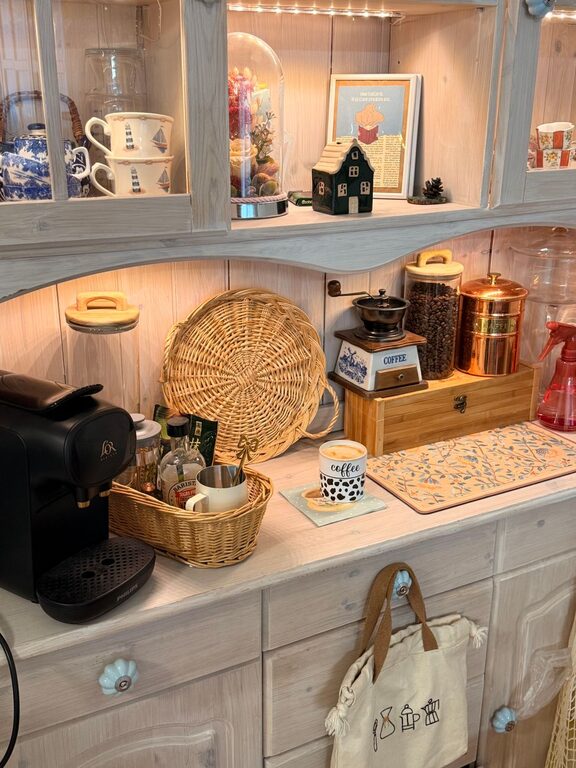
A coffee station can turn a small corner of your kitchen, dining area, or home office into a useful and inviting part of your home. It does not need to be large or expensive. With the right setup, even a narrow counter or shelf can hold your coffee maker, favorite mug, supplies, and a few decorative touches.
The key is to create a station that fits your routine. Whether you enjoy brewed coffee, espresso, tea, or a simple pour-over, thoughtful organization will make each cup easier to prepare.
Choose the Right Location
Start by choosing a convenient location for your coffee station. The best spot is usually near a power outlet and a water source, although a water source is not essential if you are comfortable filling the machine by hand.
Common locations include:
– A section of kitchen counter
– A bar cart
– A small sideboard
– A floating shelf with a lower cabinet
– A breakfast nook
– A corner of a home office
– A compact utility cart
Consider how much space you need to prepare your coffee. A coffee maker should have enough room around it for filling, brewing, and cleaning. Avoid placing it directly beneath a low cabinet if steam or heat could damage the cabinet surface.
If your kitchen counter is busy, a rolling cart can be a flexible choice. You can move it when needed and use the shelves for mugs, coffee supplies, and accessories.
Measure Before You Buy
Before purchasing storage or equipment, measure the area carefully. Note the width, depth, and height available. Also check the distance to the nearest outlet.
Keep these points in mind:
– Leave space around the coffee maker for ventilation.
– Make sure the machine lid can open fully.
– Check that mugs fit comfortably on nearby shelves.
– Leave room for a grinder, kettle, or other tools.
– Consider how far the station is from the sink.
– Confirm that the surface is stable and water resistant.
Writing down the measurements can help you avoid buying items that are too large. It also makes it easier to plan shelves, trays, and containers.
Select Your Coffee Equipment
The equipment you choose should match the way you like to make coffee. You do not need every available tool. Start with the items you use most often.
A basic coffee station may include:
– Coffee maker or brewing device
– Coffee beans or ground coffee
– Mugs
– Spoons or stirrers
– Kettle, if needed
– Grinder, if using whole beans
– Sugar or other sweeteners
– Creamer or milk
– Napkins or small towels
If you enjoy brewed coffee, a standard drip machine may be all you need. A French press can work well for a simple, compact setup. Pour-over equipment takes up little space and can add a calm, hands-on step to your morning routine. If you prefer espresso drinks, you may need additional room for an espresso machine, grinder, cups, and cleaning tools.
Choose one main brewing method first. You can always add equipment later if you have enough space and use it regularly.
Add Practical Storage
Good storage keeps the station neat and makes supplies easy to find. Use the space above, below, and beside the main appliance.
Useful storage ideas include:
Use Trays
A tray creates a defined area for the coffee maker, mugs, and small accessories. It also protects the counter from small spills and makes it easier to move the entire setup when cleaning.
Choose a tray that is easy to wipe clean. Wood, metal, bamboo, and washable plastic can all work well, depending on the style of your kitchen.
Add Containers
Airtight containers can keep coffee fresh and reduce visual clutter. Label containers if you store different coffee varieties or sweeteners.
You can use separate containers for:
– Coffee beans
– Ground coffee
– Tea bags
– Sugar packets
– Stirring sticks
– Cookies or small snacks
Clear containers make it easy to see when supplies are running low. Opaque containers can protect coffee from light and create a more uniform appearance.
Use Hooks and Shelves
Small hooks under a shelf or cabinet can hold mugs without taking up counter space. A narrow shelf can store coffee, cups, and decorative items above the main station.
If you use wall-mounted storage, install it securely and avoid placing heavy items where they could fall. Keep frequently used items within easy reach.
Organize Drawers
A nearby drawer can hold measuring spoons, filters, cloths, and other small items. Drawer dividers prevent supplies from becoming mixed together.
Store paper filters in a dry location. If your coffee maker uses pods, a drawer organizer or dedicated basket can keep them arranged by flavor or type.
Keep Supplies Fresh
Coffee tastes best when stored properly. Keep beans and grounds in a sealed container away from heat, moisture, and direct sunlight. Avoid storing coffee directly above a stove or beside an appliance that produces heat.
Buy an amount that you can use comfortably before it loses its freshness. If you enjoy trying different varieties, store each one in a clearly labeled container.
Milk, cream, and other perishable items should remain refrigerated. Instead of leaving them on the counter, place them in the refrigerator and bring them to the station when needed. This keeps the area cleaner and helps prevent spoilage.
Create a Simple Workflow
Arrange the station in the order you use everything. For example, place coffee and filters near the brewing machine, mugs beside the machine, and spoons or sweeteners in front or nearby.
A practical layout might look like this:
- Coffee and filters on one side
- Coffee maker in the center
- Mugs and spoons on the other side
- Sweeteners and napkins in a small tray
- Cleaning supplies in a drawer or cabinet below
This arrangement reduces unnecessary movement. It also makes the station easier for family members and guests to use.
Add Personal Style
A coffee station can be practical while still reflecting your taste. Add a few details that make the space feel welcoming without making it crowded.
Consider including:
– A small framed print
– A potted herb or low-maintenance plant
– A decorative mug tree
– A small chalkboard or menu board
– A favorite serving tray
– A container for seasonal coffee accessories
– A washable runner or mat
Try to limit decorative items to pieces that do not interfere with cleaning or brewing. A simple color theme can make the area look more coordinated. For example, choose matching containers and mugs in neutral colors, or add a few colorful pieces to create a cheerful accent.
Make Cleaning Easy
A clean coffee station is more enjoyable and helps equipment work properly. Keep a small cloth nearby for wiping spills, but wash it regularly.
Build these tasks into your routine:
– Wipe the counter and tray each day.
– Empty coffee grounds or used pods promptly.
– Rinse removable parts after use.
– Wash mugs and spoons regularly.
– Clean the coffee maker according to the manufacturer’s instructions.
– Check containers for crumbs or moisture.
– Remove unused items that collect dust.
Place a small wastebasket or compost container nearby if your space allows. This can make cleanup faster, especially when disposing of filters or coffee grounds.
Start Small and Adjust
You do not have to create a complete coffee bar in one day. Begin with the equipment and supplies you already use. Once you see how the station functions, you can identify what is missing or what takes up unnecessary space.
After a week or two, ask yourself:
– Is everything easy to reach?
– Do I have enough counter space?
– Are supplies staying fresh?
– Is anything rarely used?
– Would a shelf, tray, or cart improve the layout?
– Is cleanup simple?
A well-designed coffee station should support your habits, not create extra work. With a suitable location, organized storage, and a few personal touches, you can create a comfortable home coffee station that makes every cup feel a little more special.
About the Author